
Finding a pile of white foam on the floor is an unsettling start to any morning. If your dog is vomiting white foam, you're probably wondering what caused it, whether you need to rush to the vet, and what you can do right now to help. The honest answer is: it depends. Dog vomiting white foam has a long list of possible causes, and most of them are minor.
A handful are genuine emergencies. This guide walks through everything you need to know to tell the difference: the full range of causes, what home treatment actually looks like, how to spot the serious warning signs (including GDV), and how to support your dog's recovery.
What White Foam Vomit Actually Is
White foam on its own doesn't tell you much about the cause, but it does tell you something about what's happening in your dog's digestive tract. The foam forms when air, saliva, stomach acid, and other gastric juices mix together in the upper digestive tract, often when the stomach is empty and gas has been building up. It can look frothy and light, almost like beaten egg whites, or thicker and more gel-like depending on how much mucus is present.
This is different from clear liquid vomit (which is usually stomach fluid or water) and from the yellow or green bile that comes up when a dog has been going without food for too long. White foam most commonly points to stomach irritation without food content to expel.
Is It Vomit or Something Else?
Before you assume your dog vomited, check one thing: did their abdomen contract? Vomiting always involves visible abdominal heaving. If your dog made a coughing or gagging motion and white foam appeared without much abdominal effort, what you're seeing may be foam produced in the airways rather than the stomach. Kennel cough and other respiratory conditions can cause dogs to cough up white or foamy mucus that looks very similar to vomit. This distinction matters for treatment, and it matters for how urgent the situation is.
The Most Common Causes of Dog Vomiting White Foam
Most single episodes of white foam vomit in adult dogs trace back to one of a few common, manageable causes. Repeated episodes, or foam paired with other symptoms, changes the picture.
Bilious Vomiting Syndrome (Empty Stomach)
Bilious vomiting syndrome is one of the most common reasons dogs vomit white or yellow foam in the morning. It happens when the stomach has been empty for too long and bile from the small intestine flows back into the stomach, irritating the lining. The result is a bout of vomiting, often first thing in the morning before breakfast, in an otherwise healthy dog.
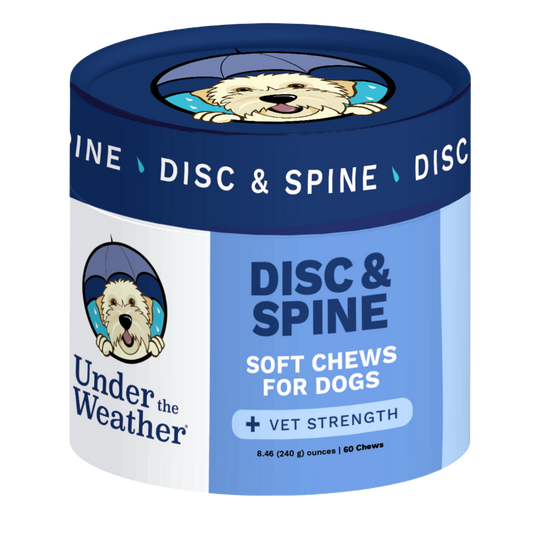
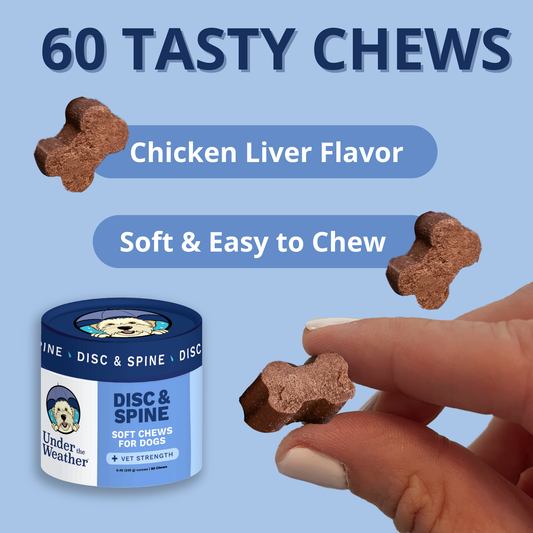
The American Kennel Club notes that the condition is typically easy to manage. A late-evening snack before bed often prevents the overnight buildup entirely. A small bedtime snack can help settle the stomach overnight, and Under The Weather's calming chews double as an easy option here since they contain L-tryptophan, which supports rest. Dogs that don't respond to a feeding schedule change may benefit from a small meal added before bed consistently, or a vet consultation for additional support.
Indigestion and Dietary Indiscretion
Dogs are not always thoughtful about what they eat. Grass, garbage, table scraps, sticks, dead animals, and household objects are all fair game as far as many dogs are concerned. When a dog's stomach is irritated by something they shouldn't have eaten, white foam is a common result as the stomach tries to expel or neutralize whatever is causing the problem. This kind of vomiting usually resolves within a few hours once the offending material has passed or been vomited up. One exception to watch for: grass treated with lawn chemicals. Residue from fertilizers and weed treatments can cause serious reactions and may warrant emergency veterinary care, so don't dismiss grass-eating as harmless if your dog has access to a treated lawn. Occasionally a swallowed foreign object, like a sock, a chunk of a toy, or a rock, irritates the stomach or causes a blockage, which is a more serious situation that needs a vet.

Kennel Cough and Respiratory Infections
Kennel cough (infectious tracheobronchitis) is a highly contagious respiratory illness that causes a characteristic honking cough, often followed by white or foamy mucus. As the ASPCA explains, the condition spreads easily wherever dogs gather: boarding facilities, dog parks, grooming salons, and training classes.
What distinguishes kennel cough foam from vomiting is that the coughing comes first and the abdomen doesn't heave. Dogs with kennel cough are usually still eating and alert, and the foam is made of respiratory secretions coughed up from the airways rather than stomach contents.
If your dog has recently been around other dogs and is making a persistent hacking cough alongside the foam, kennel cough is a strong possibility. Contact your vet for guidance on treatment options and any vaccination recommendations.
Acid Reflux and Gastritis
Gastritis (stomach lining inflammation) and acid reflux can both produce white foam vomiting. These conditions are often triggered by sudden diet changes, eating too fast, stress, or ongoing dietary sensitivities. A dog with chronic intermittent vomiting that happens in the morning, specifically when the stomach is empty, may have underlying reflux rather than simple bilious vomiting syndrome. Your vet can distinguish between the two and suggest whether dietary adjustments or medication might help.
Chronic and Underlying Conditions
When white foam vomiting becomes a recurring pattern rather than a one-off, it can point to a systemic problem rather than a simple empty stomach. Conditions affecting the digestive system, such as inflammatory bowel disease (IBD), along with metabolic issues like kidney disease, can all show up as ongoing vomiting. In these cases a vet will often run blood work to check organ function and narrow down the cause. Recurring episodes are worth investigating rather than just managing at home.
Pancreatitis
Pancreatitis is an inflammation of the pancreas, and certain breeds, including Miniature Schnauzers, Cocker Spaniels, and Yorkshire Terriers, carry a higher baseline risk for it. Any dog can be pushed over the edge by a rich or high-fat meal. An early pancreatitis episode can look like ordinary indigestion at first: some foam vomiting, a dog who seems a bit off, nothing that immediately screams emergency. The distinction becomes clearer as the episode progresses, with abdominal pain, lethargy, and sometimes diarrhea developing alongside the vomiting.
If you suspect pancreatitis, a vet visit is needed to confirm the diagnosis and discuss treatment options for your dog.
Ingestion of Toxins
Certain plants, household chemicals, and foods toxic to dogs (xylitol, grapes, certain mushrooms) can cause vomiting as the body's first response to the toxin. If you have any reason to think your dog ate something toxic, call your vet or the ASPCA Animal Poison Control Center immediately (888-426-4435). Do not wait for other symptoms to develop.
Dog Vomiting White Foam vs. Bloat: The Critical Difference
This is the one you most need to know. Gastric dilatation-volvulus (GDV), commonly called bloat, is a life-threatening emergency that can kill a dog within hours if not treated surgically. One of the early signs is unproductive retching or vomiting white foam shortly after eating, often accompanied by a distended, hard abdomen and extreme distress.
GDV occurs when the stomach fills with gas and then twists on itself, cutting off blood flow. It is far more common in large, deep-chested breeds including Great Danes, German Shepherds, Standard Poodles, Irish Setters, Weimaraners, and Dobermans. Cornell University College of Veterinary Medicine reports that GDV is one of the leading causes of death in large and giant-breed dogs. Research published in the Journal of the American Veterinary Medical Association estimates the lifetime likelihood of GDV at roughly 24% in large-breed show dogs and even higher for certain breeds like Great Danes.
GDV Warning Signs (Treat as Emergency)
If your dog is vomiting white foam AND any of the following are present, go to an emergency vet immediately:
- Distended or hard abdomen
- Repeated retching without producing much vomit
- Restlessness, pacing, and inability to get comfortable
- Pale or white gums
- Weakness or collapse
- Rapid breathing or panting with no obvious cause
- The episode started shortly after a large meal or vigorous exercise
There is no effective home treatment for GDV; it requires emergency care at a veterinary hospital. Time is the only variable you can control.
A Quick Comparison: Common White Foam Causes
| Cause | Typical Timing | Other Signs | Urgency |
|---|---|---|---|
| Bilious vomiting syndrome | Early morning, before meals | Otherwise normal | Low; manage with feeding schedule |
| Indigestion / dietary indiscretion | Within 1-4 hours of eating something | May include food pieces in vomit | Low to moderate; monitor |
| Kennel cough | Any time; preceded by coughing | Hacking cough, mild lethargy | Moderate; call vet |
| Gastritis / acid reflux | Morning or variable | Repeated episodes, sometimes chronic | Moderate; vet if recurring |
| Pancreatitis | After high-fat meal | Abdominal pain, lethargy, diarrhea | High; vet visit needed |
| GDV (bloat) | Shortly after eating / exercise | Distended abdomen, retching, restlessness | Emergency; go immediately |
| Toxin ingestion | Shortly after exposure | Variable depending on toxin | Emergency; call vet or poison control |
At-Home Care for Mild White Foam Vomiting
When a single episode of white foam occurs in an adult dog who is otherwise acting normally, eating and drinking without issue, and showing no warning signs, home monitoring is usually appropriate.
What To Do in the First 12 Hours
Withhold food for 2-4 hours after a vomiting episode to let the stomach settle. Offer small amounts of water to keep your dog hydrated, but don't let them drink a large amount all at once, which can trigger more vomiting. If your dog keeps water down for a couple of hours, you can offer a small amount of bland food.
A bland diet of plain cooked chicken and rice is the standard go-to for digestive recovery. It's gentle on the stomach, easy to digest, and most dogs readily accept it. Getting the portions, timing, and transition back to regular food right keeps a bland diet from causing its own setbacks.
Under The Weather's Chicken & Rice bland diet is a convenient pre-made option if you don't have plain chicken and rice on hand. The formula is designed specifically for digestive recovery and removes the guesswork around ingredients and portions.
Supporting Recovery with Probiotics
After any digestive disruption, the gut microbiome can take time to rebalance. A probiotic formulated for dogs can help restore the beneficial bacteria that support normal digestion. Look for a dog-specific product rather than a human probiotic, since the bacterial strains that support canine gut health differ from those marketed for humans.
Under The Weather's probiotic chews and powders are designed to complement a recovery plan and can be added to a bland diet meal or offered alongside it. Think of probiotic support as the recovery phase: the bland diet addresses the immediate upset, and the probiotic helps stabilize digestion going forward.
What Not to Give
Do not give your dog human medications for nausea or vomiting without veterinary guidance. The Merck Veterinary Manual warns that some common human anti-nausea drugs can cause serious side effects in dogs. If you're considering medication, check with your vet first.
Knowing what's safe, what's risky, and how to read your dog's nausea signals helps you respond calmly rather than reaching for the medicine cabinet.
Warning Signs That Mean It's Time to Call the Vet
Single episodes of white foam vomiting in an otherwise healthy adult dog can reasonably be watched for a few hours, but some situations call for prompt veterinary care. Call your vet when:
- Any of the GDV signs listed above are present (distended abdomen, repeated unproductive retching, restlessness, pale gums)
- The vomiting started right after a large meal or vigorous exercise in a large, deep-chested dog
- Blood appears in the vomit
- The episode followed known or suspected toxin exposure
- Vomiting is occurring four or more times within a 24-hour window
- Diarrhea is present alongside vomiting, particularly if the stool is bloody or watery
- Your dog won't eat after 24 hours or is noticeably weak and hunched
- Your dog is under a year old, a senior, or managing a chronic health condition
- Your dog is a puppy or unvaccinated, where white foam vomiting can be an early sign of a serious infection like Parvovirus
Puppies and senior dogs deserve faster attention than healthy adults. They dehydrate more quickly and have less reserve to handle a prolonged digestive upset.
When Home Care Is Enough
The majority of single-episode white foam vomiting in healthy adult dogs doesn't need emergency treatment. What it does need is close observation and a calm, practical response: pull back on food briefly, offer water in small amounts, and transition to a bland diet once your dog keeps fluids down.
If your dog bounces back within a few hours and there are no additional symptoms, you've handled it appropriately. Adding a bland diet meal and some probiotic support for the next day or two can help the gut finish settling on its own. Under The Weather's bland diet and digestive recovery products are built for exactly this kind of situation: easy to prepare, designed for dogs, and straightforward to use at home without a lot of guesswork.
The key is knowing when the situation stops being "wait and watch" and becomes a need for prompt veterinary care. That threshold is lower than most owners realize for large breeds, for puppies, and any time a distended abdomen is part of the picture, when emergency care can be the difference between a good outcome and a tragedy.