
If your dog has been dragging their backside across the floor or carpet, you already know how confusing it can be. Is this a big deal? Is it painful? Do you need a vet right now, or can you handle it at home?
For most dogs, scooting traces back to a common, manageable cause, and there are several practical home remedies for dog scooting that genuinely help when used correctly.
This guide covers what's actually driving that behavior, which remedies address the root cause, and the signs that tell you it's time to stop managing at home and pick up the phone.
Why Dogs Scoot: Understanding What's Actually Going On
Scooting looks odd, but from your dog's perspective it makes complete sense. Something is irritating the area around their rear, and dragging against the floor provides temporary relief from that itch or pressure.
The tricky part is that "something irritating" can mean a few different things, and the right home remedy depends on knowing which one you're dealing with.
Anal Gland Issues Are the Most Common Cause
Dogs have two small sacs, one on each side of the anus, that produce a strong-smelling fluid. Under normal circumstances, those sacs express naturally during a firm bowel movement. When they don't empty well, the fluid builds up, leaving your dog with full anal glands that feel uncomfortable, and they start looking for friction relief.
According to VCA Animal Hospitals, anal gland problems are among the most common reasons dogs scoot, lick at their rear end, or show discomfort when sitting. Left unaddressed, impacted anal glands can progress to infection or abscess, which are painful and require veterinary treatment.
Small breed dogs tend to be more prone to anal gland issues because their ducts are narrower and more prone to blockage. Overweight dogs also have more frequent problems because excess body weight reduces the natural pressure that helps the sacs empty.
Other Causes Worth Ruling Out
Anal glands are the leading culprit, but they aren't the only one. Other causes include:
- Intestinal parasites and intestinal worms, particularly tapeworms, which cause itching near the anal area. You may notice small rice-like segments near your dog's rear end or in their stool.
- Allergies (food or environmental), which create persistent skin irritation, inflammation, and other skin issues that can drive ongoing scooting even after anal glands have been expressed. If your dog is itchy in more places than just their rear, there are several ways to calm allergy-related skin irritation in dogs at home.
- Skin irritation or matting around the anal area, especially in longer-coated breeds.
- Post-grooming sensitivity, if the area was recently shaved or clipped.
If your dog's scooting seems to come back quickly after their anal glands are expressed, allergies are often the reason. The American Kennel Club notes that food allergies in particular are a common driver of chronic scooting.
Home Remedies for Dog Scooting That Can Actually Help
Once you have a reasonable sense of what's driving the scooting, you can pick the remedies most likely to make a difference. The goal of most home approaches is to support natural anal gland expression, reduce irritation, and give the digestive system what it needs to function well.
Add Fiber to Support Natural Expression
The most consistently effective home remedy for dogs prone to anal gland trouble is increasing dietary fiber. Here's why it works: fiber adds bulk to stool, and firmer, bulkier stool puts more pressure on the anal sacs as it passes. That pressure is what drives natural gland expression, emptying the sacs as stool passes.

The Cornell University College of Veterinary Medicine specifically highlights fiber supplementation as a helpful management approach for dogs with recurring anal sac disease.
Practical fiber sources to try:
| Fiber Source | Amount | Notes |
|---|---|---|
| Plain canned pumpkin (not pie filling) | 1-2 tsp per day (small dog) / 1-2 tbsp (large dog) | Most dogs accept it easily mixed into food |
| Ground flaxseed | 1 tsp per cup of food | Add gradually to avoid gas |
| Plain cooked sweet potato | Small amounts | Also adds vitamins; easy on digestion |
| Psyllium husk (unflavored) | Follow package weight guidelines | Increase water intake alongside |
Start with small amounts and increase gradually. Too much fiber too quickly can cause gas or loose stools, which creates the opposite of what you want. You're looking for firm, well-formed stool that does the job on the way out.
If your dog is already prone to digestive inconsistency, a gentle bland diet that supports gut regularity can help, since consistent stool quality and anal gland health are closely connected.
Some pet parents also stir a splash of plain, unsalted bone broth into meals to boost hydration and tempt picky dogs to eat their fiber. Bone broth won't cure anal gland issues on its own, but the added moisture supports the soft, well-formed stool that keeps the sacs emptying naturally.
Switch to a Bland Diet (Even Temporarily)
If digestive upset or a possible food sensitivity is contributing to the scooting, a short stretch on a bland diet can settle the gut and help you spot what your dog tolerates well. A simple, easily digestible meal gives the digestive system a break while you work toward firmer, more consistent stool, which is exactly the kind of stool that supports natural anal gland expression.
Under The Weather makes several ready-to-use bland diet options built from a handful of gentle, recognizable ingredients, including a Chicken & Rice Bland Diet and a Chicken, Rice & Pumpkin blend, with six flavors in all. If you want to try a few without committing to one, the 6-flavor bland diet pack lets you see what your dog prefers, and you can browse every option in the bland diets collection. A bland diet is meant to be temporary support during a flare-up, not a permanent replacement for balanced nutrition, so transition back to your dog's regular food gradually once things settle.
Encourage Hydration
Dry, hard stool from inadequate hydration can make scooting worse. When stool is too dry, it doesn't move easily and may not put steady pressure on the anal sacs, and constipation adds discomfort that some dogs try to relieve by dragging their rear. Keeping your dog well hydrated supports softer, easier-to-pass bowel movements and overall digestive regularity.
A pet water fountain encourages many dogs to drink more, since the moving water is more appealing than a still bowl. You can also work more moisture into meals with water-rich foods or a splash of plain, unsalted bone broth, both of which add hydration while making dinner a little more tempting. If your dog frequently strains or skips bowel movements, easing constipation is another way to support natural digestion.
Try a Warm Compress for Immediate Comfort
When your dog is clearly uncomfortable (licking, scooting frequently, shifting positions), a warm compress can ease the pressure from full anal glands and reduce swelling without requiring an immediate vet visit.
Soak a clean washcloth in warm water, wring it out, and hold it gently against the area for 5 to 10 minutes. Do this two or three times a day while you're also working on dietary support. The warmth improves circulation and can help soften any material that's making it harder for the sacs to drain.
This is comfort care, not a cure. If you notice swelling, a foul odor beyond the usual anal gland smell, or any visible drainage, that's a sign of infection and requires a vet visit.
Keep the Area Clean and Irritation-Free
Simple hygiene can make a noticeable difference. Gently clean around your dog's anal area with a warm, damp cloth after walks or bowel movements if you notice buildup. For longer-coated dogs, matted or overgrown fur around the area can trap bacteria and worsen irritation, so keeping that area trimmed helps.
Avoid grooming products with alcohol or strong fragrances. The skin around the anus is sensitive, and adding chemical irritants makes things worse. You may also see coconut oil suggested online as a topical soother for irritated skin; a small amount is generally harmless, but it won't relieve anal gland pressure, which is the usual root cause.
Support Gut Health With a Probiotic
There's a direct connection between digestive health and anal gland function. Consistent, well-formed stool depends on a balanced gut microbiome, and when gut bacteria are disrupted, stool quality suffers, which means the anal sacs don't get the pressure they need to empty properly.
Adding a probiotic designed for dogs can help stabilize the gut and support more consistent bowel movements over time. This is particularly relevant if your dog has recently been on antibiotics, experienced stress or a diet change, or has a history of loose stools or other digestive issues. The way probiotics support a dog's gut and overall health can help you decide whether ongoing probiotic support makes sense for your dog's specific situation.
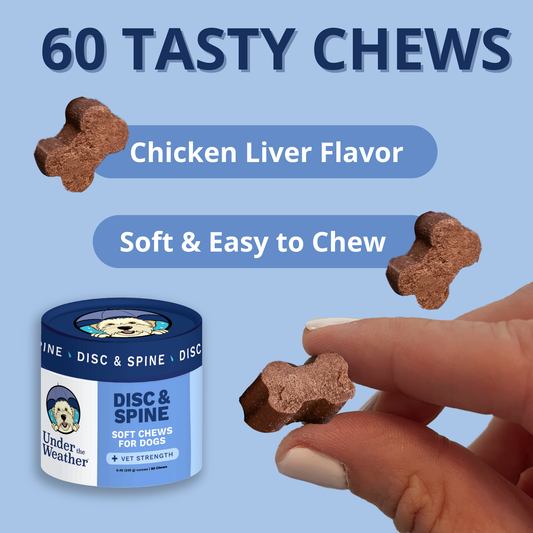
Under The Weather's probiotic products for dogs are formulated specifically for canine digestive systems. If scooting is part of a pattern of digestive inconsistency in your dog, daily probiotic support is one of the more practical things you can add without changing your dog's whole diet. Our soft chews and supplements collection is an easy place to find a daily option your dog will actually take.
Address Weight if That's a Contributing Factor
Overweight dogs are statistically more likely to have chronic anal gland problems. Excess weight around the hindquarters reduces the natural compression that helps the sacs empty during defecation. If your dog is carrying extra weight, gradual, vet-guided weight reduction often makes a meaningful difference in how often the anal glands need attention.
This isn't a quick fix, but it's worth factoring in if your dog's scooting has become a recurring issue and other causes have been ruled out.
What Doesn't Work (and What Could Make Things Worse)
Some approaches that seem logical don't actually address the underlying problem, and a few can cause harm.
Expressing anal glands at home yourself: External manual expression, while sometimes demonstrated in online videos, carries real risk if done incorrectly. Improper technique can damage the ducts or push material in the wrong direction, leading to infection. Your veterinarian or a trained vet tech can do this safely and will tell you whether it's something that might make sense to learn for your specific dog's situation.
Ignoring recurring scooting: A single scooting episode in an otherwise healthy dog isn't usually cause for alarm. But if it keeps happening, something is driving it, and waiting too long lets minor anal gland impaction progress toward infection.
Switching diets frequently: If food allergies may be contributing, the answer isn't to rotate through options quickly. Work with your vet to do an appropriate elimination trial so you can actually identify the trigger.
When Home Remedies Aren't Enough
Most mild scooting in otherwise healthy adult dogs responds well to dietary fiber, gut support, and basic hygiene. But there are situations where home care isn't appropriate and a vet visit matters.
Watch for these signs that the situation needs professional attention:
- Scooting is frequent and persistent (more than a few times a day for several days)
- You can see or feel swelling on either side of the anus
- There is drainage, discharge, or a noticeably foul odor beyond the usual anal gland smell
- Your dog is showing visible pain, reluctance to sit, or sensitivity when you touch the area
- There is blood near the anal area
- You notice rice-like segments in your dog's stool or near their rear end (possible tapeworms)
- Scooting is accompanied by other symptoms like lethargy, diarrhea, or loss of appetite
The Merck Veterinary Manual notes that impacted anal sacs, if untreated, can become infected or form abscesses that may rupture. Anal sac infections require antibiotics and professional flushing of the affected sac. This isn't a situation where home remedies are going to resolve things.
If your dog has never had their anal glands expressed professionally and is scooting for the first time, a vet visit is a good first step. They can assess whether the glands are full, rule out infection, and give you a clear picture of what you're actually dealing with before you invest in a home management routine.
What This Means for Your Dog's Routine
For many dogs, scooting is a recurring issue that responds well to consistent management rather than a one-time fix. The most effective long-term approach combines a few things: a fiber-supportive diet that produces firm, regular stool; gut support through probiotics when needed; maintaining a healthy weight; and knowing when to get professional help.
If your dog has already had their glands expressed recently and is still scooting, that's usually a sign that something else is contributing. Allergies are the most common explanation in that scenario, and a conversation with your vet can help identify whether a food trial or environmental allergy management might reduce the frequency.
For dogs prone to constipation or irregular stools, proactive fiber and probiotic support tends to reduce how often anal gland problems come up in the first place. Consistent gut health and consistent stool quality are two sides of the same coin.
Under The Weather makes probiotic and digestive support products designed specifically for dogs, formulated with the kind of strains that actually support canine gut function. If you're looking for straightforward digestive support for a dog that deals with scooting or irregular stools, browse our soft chews and supplements and bland diets to see what fits your dog's needs. For a broader look at what triggers scooting in the first place, it helps to understand the underlying causes.
Home remedies work best when they're matched to the right cause. Fiber and gut support are the most reliable first steps. Clear warning signs mean your vet should be in the loop. Most dogs that scoot occasionally can be managed well at home with a little consistency.