
If you've picked up a bag of collagen chews at the pet store recently, you're not alone. They've become one of the more popular chew options on shelves, and a lot of dog owners are asking the same question: are collagen chews safe for dogs, or is this just another treat trend worth being skeptical about? The short answer is that collagen chews are generally considered safe for most dogs, but there are a few things worth understanding before you toss one to your pup.
One quick note before we dig in: "collagen chews" can mean two different things. The first is a hide-based chew stick, made from the inner layer of beef hide and given as an occasional chew (that's what most of this article covers). The second is a vet-formulated collagen supplement, a soft chew dosed daily for a controlled amount of collagen. The two are easy to confuse on a shelf, so we'll cover the chew stick first and then explain where a supplement fits in.
What Are Collagen Chews, Exactly?
Collagen chews are made from the inner layer of beef hide, which is where the collagen-rich connective tissue lives. Unlike rawhide, which uses the tougher outer layer of skin and requires more chemical processing to achieve its final form, collagen chews start from a softer, more pliable part of the hide. They're dried and formed into sticks or rolls, and most versions have a chewable but not rock-hard texture.
The collagen itself is the structural protein that holds connective tissue together. It makes up roughly 30 percent of total protein in a dog's body, showing up in tendons, ligaments, cartilage, skin, and gut lining. When dogs chew and digest a collagen treat, that protein gets broken down and absorbed, providing the building blocks for tissues that rely on collagen to stay strong and flexible.
How Collagen Chews Differ From Rawhide
This is probably the most common comparison owners run into when shopping for chews, and it's a meaningful one. Traditional rawhide comes from the outer layer of cattle hide, which is much denser and goes through a more extensive processing step involving chemicals like bleach and formaldehyde to soften and shape the product. Rawhide is well-documented as a tough digestive challenge for dogs: it doesn't break down reliably in the stomach, can swell with moisture into large chunks, and is associated with choking and intestinal blockage.
Collagen chews behave differently in the digestive system. Because they come from a softer part of the hide with less processing, they begin to soften in the mouth and continue breaking down in the stomach more predictably. Studies have reported digestibility rates for collagen chews in the high 90th percentile, compared to rawhide's far less predictable digestion profile. For families who have been concerned about rawhide safety, collagen chews are worth looking at as an alternative.
You may also be comparing collagen chews to bully sticks. Our post on what bully sticks are made of covers that in detail, but briefly: bully sticks are made from bull pizzle (dried beef muscle), which digests easily. Both bully sticks and collagen chews are considered digestible alternatives to rawhide, though they have slightly different textures and nutrient profiles.
Are Collagen Chews Safe for Dogs?
For the majority of healthy dogs, yes. Collagen chews are widely considered a safer chew option compared to traditional rawhide, and many veterinarians recommend them as an alternative. That said, "generally safe" doesn't mean risk-free, and understanding the real risks helps you make a smarter choice for your specific dog.
Digestibility and Blockage Risk
The most important safety variable with any chew is what happens when your dog swallows pieces. With collagen chews, the risk of blockage is lower than with rawhide because the material is more digestible. But no chew is entirely risk-free if large pieces are swallowed. An aggressive chewer who breaks off a big chunk and swallows it whole can still experience digestive discomfort, and in rare cases, partial blockage.

With any chew, including rawhide, the most common safety concern is pieces that break off and get swallowed rather than chewed down. The same logic applies to collagen chews: size-appropriate chews and supervision are the practical safeguards. When the chew wears down to a short piece your dog could easily swallow whole, take it away.
Choking Risk
Choking is the other real concern with chews, and again, it comes down to supervision and size. Choose a collagen chew that's proportionate to your dog's size and chewing strength. A small chew that a large dog can break off in chunks is a poor fit. A chew that's too long and inflexible for a small dog can also be awkward. Most manufacturers size their products by weight range, and following those guidelines is a reasonable starting point.
Watch your dog the first few times they have any new chew. You'll learn their style quickly: some dogs are methodical and steady, others try to demolish things in three minutes flat. That chewing style should inform how closely you supervise and how long you let a session go.
Digestive Upset
Some dogs experience mild digestive upset, usually loose stools or soft stool, when they first try collagen chews, especially if they have a sensitive stomach or they overdo it. This isn't a sign that collagen chews are dangerous; it typically reflects that the dog's gut needs time to adjust to a new protein, or simply that they ate too much too fast. Introducing any new treat gradually is a good habit. Starting with shorter chewing sessions and working up to the full duration tends to minimize this kind of reaction.
If your dog already has a history of digestive issues, checking in with your vet before introducing collagen chews is a smart precaution. Dogs prone to pancreatitis or those on restricted-fat diets may need different options.
Health Benefits of Collagen Chews for Dogs
The safety conversation tends to get most of the attention, but collagen chews (often sold as collagen sticks) also offer some genuinely useful benefits beyond just giving your dog something to do with their mouth. Because collagen sticks are essentially concentrated structural protein, they supply amino acids the body can use, and the different types of collagen support different tissues.
Joint and Connective Tissue Support
Collagen is the primary structural protein in cartilage, tendons, ligaments, and other connective tissues. When dogs eat collagen-rich foods or treats, the hydrolyzed collagen peptides (the broken-down fragments) are absorbed and supply amino acids the body uses to maintain those tissues. The type II collagen found in cartilage is most associated with joint health, while the type I collagen that dominates beef-based collagen sticks supports skin, tendon, and bone. This matters most for older dogs or larger breeds prone to joint wear, where steady collagen intake can be one part of a broader joint health routine.
A 2021 placebo-controlled study found that oral supplementation with bioactive collagen peptides in dogs with naturally occurring osteoarthritis produced measurable improvements in gait over 12 weeks. Chews alone won't replicate the concentrated dose of dedicated collagen supplements, but they do contribute collagen to the diet in a form dogs actually enjoy, adding a small, steady push toward healthy joints over time. If your dog is already dealing with joint stiffness or mobility changes, our post on dog hip and joint support covers targeted options that go further than a chew.
Skin and Coat Health
Collagen also supports skin elasticity and coat quality. Type I and Type III collagen, which are the predominant forms in beef-derived collagen, contribute to the structural integrity of the skin and the thickness and shine of the coat. Research published in Frontiers in Veterinary Science has documented how collagen peptides help regulate protein expression in canine skin cells, supporting what many owners already observe: that consistent collagen intake tends to correlate with a healthier coat. For owners who want more targeted support for coat and skin, our guide to dog skin and coat supplements outlines a fuller approach.
Gut Health Support
Collagen is naturally rich in the amino acids glycine, proline, and glutamine, which help maintain and repair the gut lining. A healthy, intact intestinal barrier supports proper nutrient absorption and helps keep the gut from becoming overly permeable. Glycine in particular plays a role in regulating stomach acid and supporting a stable gut barrier. This benefit shows up most clearly with a consistent daily dose of collagen, which is one of the practical differences between a supplement and an occasional chew stick.
Dental Engagement
Chewing itself is beneficial for dogs. The mechanical action of working through a chew helps scrape plaque from the tooth surface, supports healthy gums, and gives dogs an appropriate outlet for natural chewing instinct. The Veterinary Oral Health Council (VOHC) maintains a list of products that meet plaque and tartar reduction standards, and while not all collagen chews carry the VOHC seal, the chewing action itself still supports dental hygiene as part of a broader routine.
Chewing also has a calming effect for many dogs. A dog who gets regular chewing time is often a less anxious, more settled dog, which matters in households where chewing is partly a stress-response behavior.
How To Choose a Collagen Chew for Your Dog
Not all collagen chews are equal, and a few things are worth checking before you buy.
| What to Check | What to Look For |
|---|---|
| Ingredient list | Beef collagen as the primary ingredient; natural ingredients and minimal additives |
| Processing transparency | No bleach, formaldehyde, or chemical softeners listed |
| Size guidance | Product recommends a size range matching your dog's weight |
| Country of origin | Manufactured or sourced in the US, Canada, or EU where regulations are stricter |
| Artificial preservatives | Avoid propyl gallate, ethoxyquin, BHA, and BHT where possible |
| Allergen consideration | Beef allergy is rare but real; opt for alternatives if your dog reacts to beef |
Single-ingredient or minimal-ingredient products are the safest bet. Some collagen sticks are flavored with broth or other additives, which is usually fine, but the simpler the ingredient list, the easier it is to identify what's causing a reaction if one occurs. Single-ingredient collagen sticks made from grass-fed beef and free of artificial ingredients are generally the cleanest option.
Dogs with known food allergies deserve a closer look at the label. While beef collagen is a different protein source than beef muscle meat, a dog with a significant beef sensitivity may still react. Your vet can help you figure out whether a collagen chew makes sense if your dog has known allergies.
The Other Kind of Collagen Chew: A Vet-Formulated Supplement
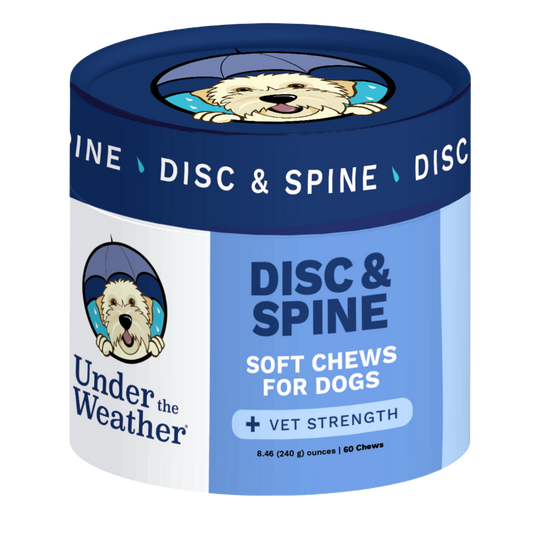
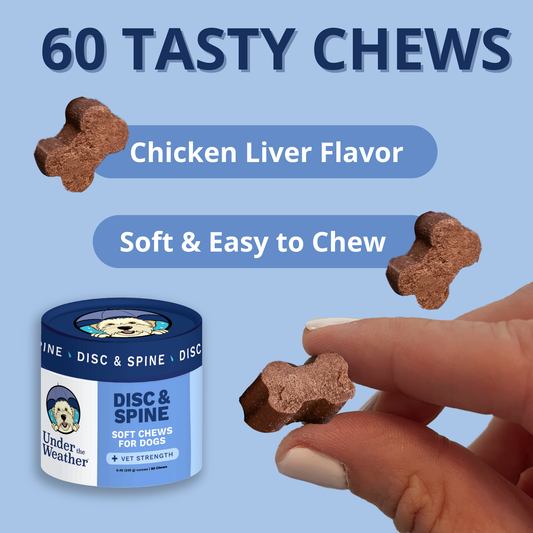
Everything above is about hide-based chew sticks. But as we noted at the top, "collagen chews" can also mean a collagen supplement, and that's a meaningfully different product. Under The Weather's Collagen Chews for Dogs are a vet-formulated soft chew that delivers 250 mg of chicken collagen per chew in a chicken-liver flavor dogs actually want. Rather than a stick your dog gnaws on, these are dosed treats you give daily.
Chicken collagen is naturally rich in Type II collagen, the form most associated with cartilage and joint health, which is why the chews are formulated to support joints and mobility, disc and spine health, skin and coat, and digestion and gut health. For breeds prone to spinal issues like Dachshunds and Bulldogs, that disc and spine support is a notable reason owners reach for a supplement over a chew stick. If you want a deeper look at how collagen works in a dog's body, our companion post on collagen for canines and understanding the benefits for dogs walks through it.
The real appeal of the supplement format is a clean, controlled dose. A hide chew stick gives a variable, hard-to-measure amount of collagen and carries the chew-stick risks we covered above, mainly blockage and choking from swallowed pieces. A soft-chew supplement sidesteps those concerns entirely while still delivering collagen's benefits, which makes it a better fit for dogs who need steady collagen support but aren't well suited to gnawing on a stick.

How To Dose the Supplement
Because the supplement is a measured treat rather than an occasional chew, dosing works differently than the "one stick every few days" guidance for hide chews. Dosage scales with your dog's size: smaller dogs generally do well on 1 to 2 chews daily, while larger breeds may need up to 4 chews daily. As with any new supplement, introduce it gradually and watch for digestive upset, since too much too fast can cause loose stools. When in doubt, your vet can confirm the right daily amount for your dog.
What This Means for Your Dog's Routine
Collagen chews fit best as an occasional treat, not a daily supplement. Most manufacturers recommend one chew every few days for average-sized dogs, though guidance varies. Think of them as a useful enrichment item and a source of supplemental collagen, not as a primary joint or skin intervention.
If your dog seems to enjoy them and tolerates them well, there's no compelling reason not to include them in a rotation of chews and treats. The practical rules are simple: supervise, size appropriately, and take the chew away when it gets short enough to swallow whole, since a short nub becomes a choking hazard for an eager chewer.
For dogs who are dealing with more significant joint concerns or who have digestive systems that react to chews, a supplement format may be a better fit than a chew. Under The Weather's vet-formulated Collagen Chews for Dogs deliver a controlled 250 mg dose of chicken collagen per soft chew, easy to dose and gentle on the stomach, supporting joints, disc and spine health, skin and coat, and gut health.
The Practical Bottom Line
Collagen chews are safe for most dogs when used with reasonable supervision and sized correctly for the animal. They are more digestible than rawhide, carry a lower blockage risk, and offer real nutritional value in the form of structural protein that supports joints, skin, and connective tissue. The risks that do exist, mostly choking from swallowed pieces and mild digestive upset in sensitive dogs, are manageable with common-sense precautions.
If your dog is healthy, doesn't have a beef allergy, and you choose a clean-ingredient product sized for their weight, a collagen chew is a reasonable addition to their treat repertoire. When in doubt about whether a chew is a good fit for your particular dog's health situation, your vet is the right person to ask. They can weigh in quickly based on your dog's history and flag anything worth watching.
From Under the Weather
Vet-formulated care for your dog.
From digestive support to everyday wellness, Under the Weather makes supplements pet parents trust.
Shop All Supplements →